
Many WordPress bloggers start with the same goal: sharing ideas, building an audience, and eventually turning their blog into something they’re genuinely proud of. But there’s often a noticeable gap between a personal blog and a professional resource that visitors trust, return to, and share with others. Crossing that gap doesn’t require a complete redesign or years of extra work — it requires making a series of deliberate improvements that cumulatively transform your blog’s quality and authority.
In this guide, we’ll explore the most impactful ways to elevate your WordPress blog from a casual personal project into a professional resource that builds a loyal readership and establishes genuine expertise in your niche.
1. Define Your Niche and Target Audience Precisely
The foundation of a professional blog is a clearly defined niche and a specific target audience. Trying to appeal to everyone means resonating with no one. Identify the specific topic you’ll focus on, the specific type of reader you’re writing for, and the specific transformation or value your blog delivers. The more precisely you can articulate who your ideal reader is — their goals, challenges, experience level, and what they’re searching for — the more effectively you can create content that speaks directly to them.
2. Invest in Professional Design
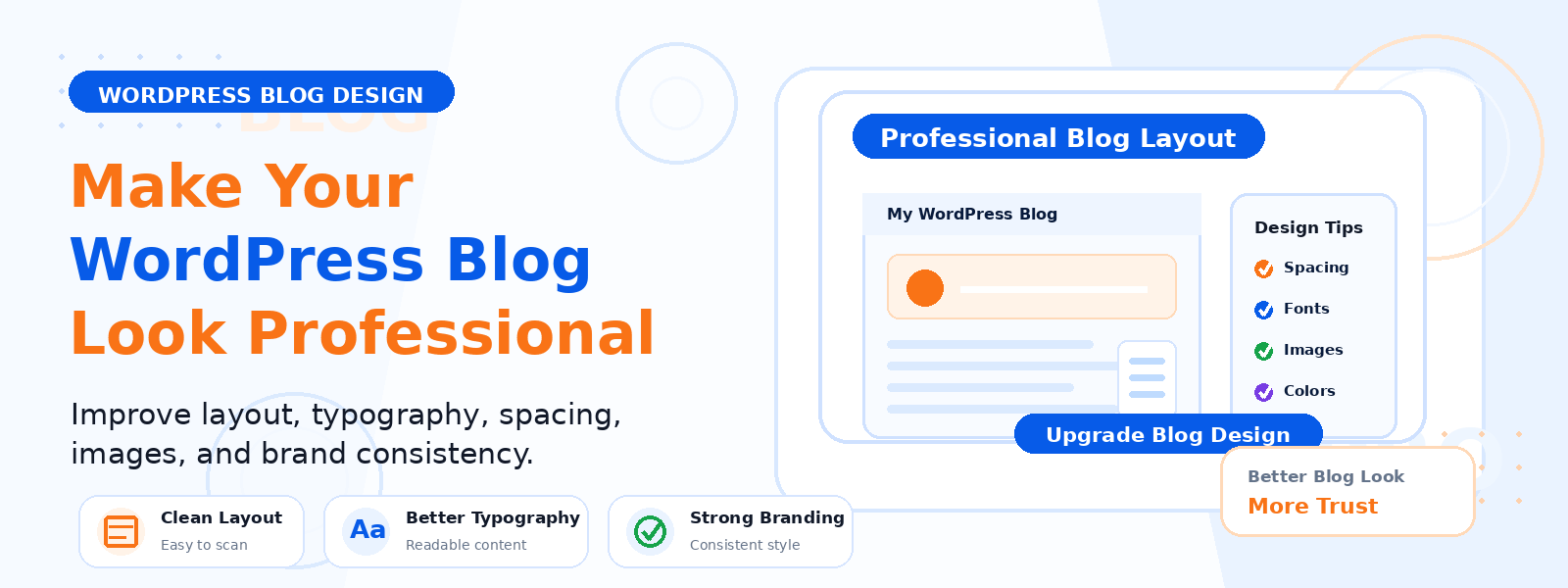
First impressions on the internet are almost entirely visual. A professional blog design communicates credibility before a visitor reads a single word. Choose a premium or well-designed free WordPress theme that reflects your niche’s aesthetic — clean and minimalist for a business blog, warm and visual for a lifestyle or food blog, sleek and modern for a tech resource. Invest in a custom logo, use consistent brand colors and typography throughout your site, and make sure every design element serves your readers’ experience rather than just looking impressive.
3. Improve Your Content Depth and Quality
Professional resources are characterized by content that goes deeper than the average. Instead of writing 500-word overviews that scratch the surface, invest in comprehensive, thoroughly researched posts that genuinely exhaust a topic. Include original data, expert insights, step-by-step processes, real examples, and actionable takeaways. Content that’s genuinely more useful and informative than what’s already ranking for your target keywords will attract backlinks, shares, and return visitors organically.
4. Create a Consistent Publishing Schedule
Inconsistency is one of the clearest signs of an amateur blog. Readers of professional resources expect new content on a predictable schedule. Whether you publish daily, weekly, or bi-weekly, consistency builds reader habits — people return when they know when to expect new content. Use an editorial calendar to plan topics in advance, and build a content buffer (publishing posts a few days after writing them) so you always have ready-to-go content if life gets busy.
5. Add an “About” Page That Builds Credibility
Your About page is often one of the most visited pages on any blog. For a professional resource, it needs to do more than introduce you personally — it needs to establish your credentials, explain why you’re qualified to write about your topic, and articulate the specific value readers get from your blog. Include a professional photo, a clear bio that highlights relevant experience or expertise, and a concise explanation of what the blog covers and who it’s for.
6. Build an Email List from Day One
Social media platforms change their algorithms, SEO rankings fluctuate, but an email list is an audience you own and control. Start building your email list as early as possible by offering a compelling lead magnet (a free guide, checklist, template, or mini-course related to your niche) in exchange for email addresses. Place your opt-in forms prominently — in the header, after blog posts, in exit-intent popups, and in the sidebar. A growing email list is one of the strongest indicators of a blog transitioning from casual to professional.
7. Improve Readability and Formatting
Professional blog posts are a pleasure to read. Use clear headings and subheadings to break up long sections, short paragraphs (3–4 sentences maximum), bullet points for lists of three or more items, bold text to highlight key phrases, and plenty of whitespace to prevent visual fatigue. Include relevant images, charts, infographics, or screenshots to break up text and illustrate complex points. Invest time in editing — cut unnecessary words, simplify complex sentences, and read your posts aloud to catch awkward phrasing.
8. Engage with Your Readers
Professional bloggers treat their readers as community members, not just page view statistics. Respond to every comment on your posts, at least in the early stages of growth. Ask questions at the end of your posts to encourage discussion. Reply to every email from readers. This level of engagement builds a loyal community that returns regularly, shares your content, and advocates for your blog within their own networks — growth that no amount of SEO or paid promotion can replicate.
Conclusion
Transforming your WordPress blog into a professional resource is a gradual process built on consistently improving content quality, design, audience relationship, and operational consistency. Focus on serving your specific audience exceptionally well, publish on a reliable schedule, and invest continuously in making each post better than the last. Over time, these cumulative improvements compound into a blog with genuine authority and a loyal readership that trusts and values what you create.