
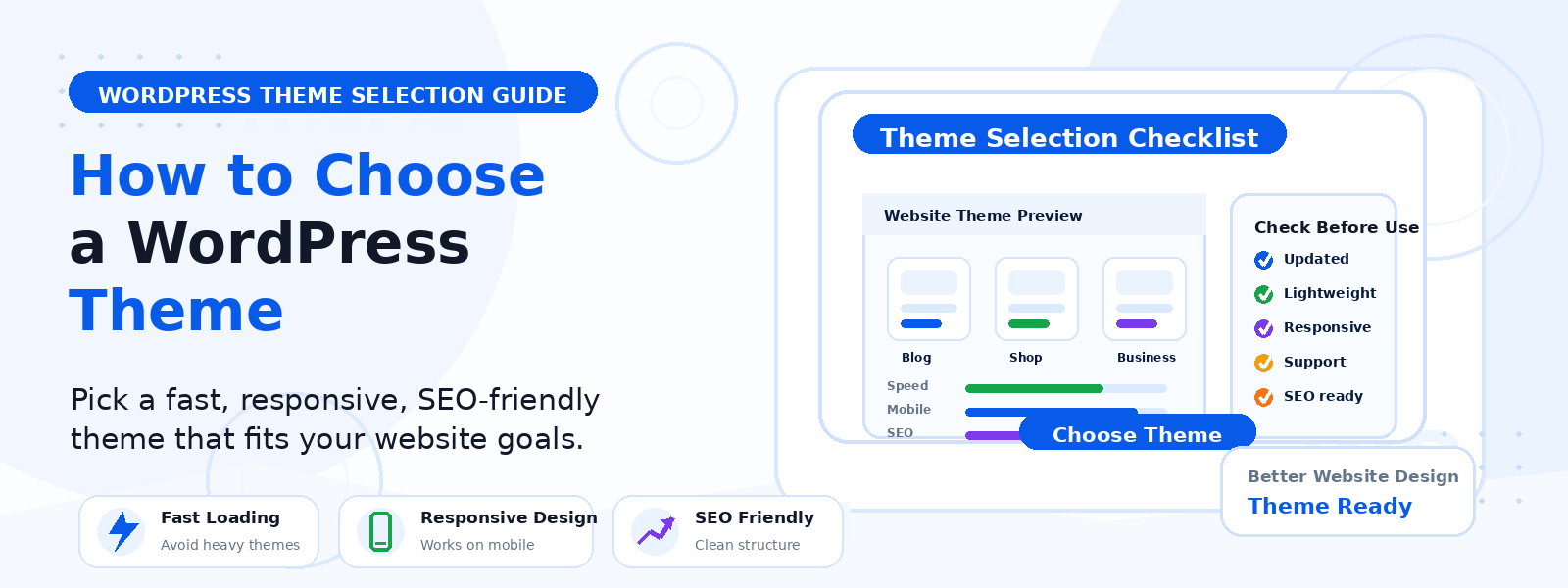
Introduction
Choosing the right WordPress theme is one of the most important decisions you will make when building a website. Your theme controls the layout, colors, typography, and overall user experience. A good theme can make your site look professional, load fast, and be easy to manage. A bad theme can slow everything down, confuse visitors, and even create problems during updates.
In this guide, we will walk through what a WordPress theme is, the difference between free and premium themes, which features you should look for, and how to avoid common mistakes. By the end, you will have a clear checklist for choosing the perfect theme for your project.
What Is a WordPress Theme?
A WordPress theme is a collection of templates, styles, and functions that define how your website looks and feels. It does not change your content itself; instead, it changes how that content is displayed.
Some key parts controlled by a theme are:
- Header and top bar, including your logo, menu, contact info, and social icons
- Footer area
- Blog layout, such as list, grid, and single post views
- Page templates like full width pages, sidebar layouts, and landing pages
- Colors, fonts, buttons, and spacing
Because themes play such a central role in design, you should choose one that matches both your brand and your long-term goals.
Free vs Premium Themes: Which Should You Choose?
There are thousands of free themes in the official WordPress.org directory and many more premium themes from marketplaces and theme shops. The best choice depends on your goals, budget, and how much flexibility you need.
Free Themes
Pros:
- No cost
- Usually follow WordPress coding standards
- Good for beginners and small personal blogs
Cons:
- Limited features and customization options
- Support may be slow or unavailable
- Fewer demo designs and layout choices
Free themes are a smart option if you are testing WordPress, starting a personal blog, or building a simple site with basic needs.
Premium Themes
Pros:
- More design options and ready-made demos
- Dedicated support from the developer
- Regular updates with new features and bug fixes
- Often include integrations with popular plugins like WooCommerce and page builders
Cons:
- One-time or yearly cost
- Some multipurpose themes can become bloated if not configured properly
If you are building a business site, online store, or serious blog, a premium theme is usually worth the investment. At Codersly, you can explore premium WordPress themes and plugins designed to help you launch faster and customize with confidence.
Must-Have Features in a Modern WordPress Theme
When comparing themes, do not focus only on screenshots. Review the features that affect usability, speed, and long-term maintenance.
1. Responsive and Mobile-Friendly Design
Most visitors browse from mobile devices. Your theme should automatically adapt to different screen sizes. Test the demo on your phone and tablet. Menus, buttons, and images should be easy to use on smaller screens.
2. Fast Performance and Clean Code
A slow website loses visitors and can rank lower in search engines. Choose a theme that is:
- Lightweight and free from unnecessary scripts and animations
- Optimized for speed
- Compatible with caching and performance plugins
Avoid themes that load too many fonts, oversized background images, or heavy sliders by default.
3. SEO-Friendly Structure
Your theme should follow basic SEO best practices:
- Proper heading structure
- Clean HTML markup
- Schema support when possible
- Compatibility with popular SEO plugins such as Yoast SEO and Rank Math
Remember, a theme alone will not make you rank. However, a poorly coded theme can definitely hurt your results.
4. Easy Customization Without Coding
Unless you are a developer, you will want a theme that is easy to manage from the WordPress Customizer or theme options panel. Look for:
- Color and typography controls
- Layout options for the header, blog, and footer
- Simple logo and favicon uploads
- Controls for top bars, social icons, contact info, and buttons
Support for page builders and the block editor is also a major advantage for beginners and non-technical users.
5. WooCommerce Compatibility
If you plan to sell products, digital downloads, or services, make sure the theme works well with WooCommerce. Check the demo for these pages:
- Shop page layout
- Single product page
- Cart and checkout design
- Account pages
A strong WooCommerce theme should style these pages consistently and keep the buying process easy for customers.
6. Regular Updates and Support
The best themes stay compatible with the latest WordPress version, popular plugins, and modern browsers. Before you buy or install a theme, check how often it is updated and what kind of support is available. Helpful documentation, ticket support, tutorials, and clear changelogs all make a big difference.
How to Evaluate a Theme Before Installing It
Before you commit to a theme, use this simple checklist:
- Preview the live demo: Browse more than the homepage. Check blog posts, archives, contact pages, and shop pages.
- Test on mobile devices: Open the demo on your phone. Are the text, buttons, and menu easy to use?
- Check reviews and ratings: Look for user feedback about support, updates, and stability.
- Read the documentation: Good documentation shows the developer cares about the product and helps you solve issues faster.
- Check required plugins: Some themes depend on too many third-party plugins, which can slow your site and create conflicts.
Common Mistakes to Avoid
When choosing a WordPress theme, try to avoid these common mistakes:
- Choosing only by appearance: A beautiful theme that is slow or unstable can cause problems later.
- Installing too many themes: Stick to one main theme and use a child theme if you need custom code.
- Ignoring accessibility: Make sure the theme uses readable text sizes, good contrast, and supports keyboard navigation where possible.
- Not using a child theme for modifications: If you edit theme files directly, your changes may be lost during updates.
A Simple Checklist for Choosing the Perfect Theme
If you want a fast decision-making process, use this checklist before you buy or install any theme:
- Does the design match your brand?
- Is it responsive on mobile and tablet?
- Does it load quickly and use clean code?
- Is it compatible with your must-have plugins?
- Can you customize it without coding?
- Does it support WooCommerce if you need ecommerce features?
- Are updates and support reliable?
- Does the theme have good documentation and positive reviews?
If the answer is yes to most of these questions, you are likely looking at a strong option for your website.
Final Thoughts
Your WordPress theme is the foundation of your website’s design and user experience. Instead of picking the first good-looking demo you see, take time to review performance, responsiveness, SEO, customization options, WooCommerce support, and the quality of updates and support.
A well-chosen theme will save you time, reduce technical issues, and help your brand look professional across all devices. If you are searching for premium WordPress themes and plugins, Codersly offers options that can help you build and customize your site with confidence.
For more help, you can also visit the Codersly homepage to explore available products and resources, or use the contact page if you need support.
Thanks for more information providing at this post.
Really helpful post! I’ve been using the same theme for 3 years and never thought about switching. This guide made me reconsider.
Great tips! Speed and mobile responsiveness are the two things I always check first. Too many beautiful themes load super slow and that kills the user experience.
Nice write-up.
I wasted months on a bloated theme before someone told me to switch to something lightweight. The difference in page load speed was dramatic — went from 6 seconds to under 2. I wish I had read something like this before starting my blog.
Does demo mode affect performance testing? I always try the live demo but it never feels the same after installing.
Bookmarked this!
The section about checking theme support and update history is gold. I once got stuck with an abandoned theme and had to migrate everything last minute. Always check the last update date before buying!
Good guide for beginners.
I always struggled choosing between free and premium themes. Your point about premium support being worth it is so true. Saved me hours of forum searching when I finally went premium.